
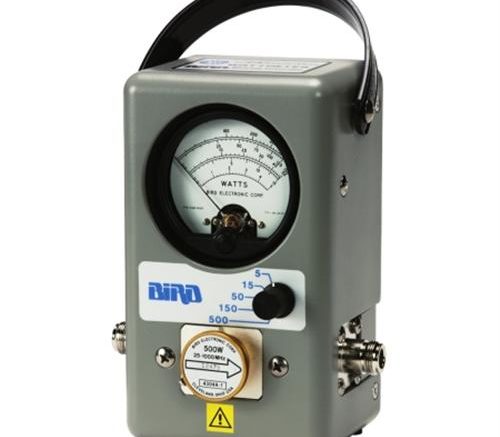
A wattmeter is a meter that measures watts. That should be the end of the story. But, it isn’t. You guys know that I’m going to tell you a lot more detail than that, right?
A wattmeter is a professional instrument designed to measure the current flow through high-capacity lines. Actually, it’s usually that. You could use the term “wattmeter” for something like this Kill-A-Watt. It measures the electricity flow at the outlet, but generally it refers to a professional quality instrument. And so I need to go back a little bit further.
A watt is a measure of power that gives an electrician a fairly complete picture of how much energy is being used. I could go into deep detail on how this all goes, but instead I’ll send you over to this really good video. It’s a little older but it really does a great job of explaining everything.
You can watch that video in your spare time. Or, you can just trust me that watts is a pretty good way to know how much power you have. For those who don’t have 7 minutes to watch, a watt is a measure of how many volts and how many amps are flowing. One watt = one volt x one amp.
So, if you’re a commercial power company employee or even someone who works in a broadcast tower, you need to know what’s going on in your high-capacity lines. You need to know if it’s flowing the way that it should. And, possibly more importantly, you need to do this without actually killing yourself.
Enter the wattmeter
That’s where one of these commercial wattmeters comes in. They’re super-over-built so that they can take the really high voltage and high load. That’s important if you’re working with wires before they come into your home. This is the kind of power that would blow up a plain old outlet tester and probably you with it.
So, even if you’re a real fan of measuring devices (as I am), you probably don’t need a wattmeter. Unless, of course, you’re going to be messing around with large amounts of electricity. What you really need instead is a multimeter, which can do a whole lot of things including reading volts and amps from batteries or even outlets if you’re super careful.
But, let’s say for a minute that you are that sort of person that uses a wattmeter. Solid Signal has a surprisingly massive selection of wattmeters and elements. Most of these commercial wattmeters have interchangeable elements so they can be used in different scenarios safely, and you can configure your wattmeter so it works properly for your specific need safely.
And yeah, I know I said regular people don’t need a wattmeter, but now I really want one. I don’t know why, I just do. I mean look at the things. They are just retro cool looking. If you think you need a wattmeter or anything else to help you with installation or measurement, call the experts! Real techs at Solid Signal are ready to help during East coast business hours. If it’s after hours, fill out the form below. We’ll get right back to you!


I think Stuart is talking apples & ranges here He starts out talking about measuring AC power which can be dangerous and then he shows us Bird Wattmeters which is the Amateur Radio operator’s gold standard for measuring a ham radio’s power output to its antenna, which yes is also an AC signal but not at 60 Hz. The present lowest Ham (Amateur) Radio frequency is 135.7 KHz, and the highest frequency is 1.295 GHz – and quite a few ranges in between these two limits.
The full Amateur Radio band plan chart can be found on the ARRL org web site if you can’t find it you can always ask for help on the ARRL web site.
So, this kind of watt meter, the Bird units, are definitely for radio frequencies to measure the power output of a radio transmitter, not the AC power line.
Also SolidSignal does sell AC line watt meters, as Stuart mentioned, just do a search on, “Kill-A-Watt” to find the p4400 Kill-A-Watt meter.
Last, why would anyone, other than an electrician, need something that measures the AC Line power into your house? After all the electric company puts a watt meter on every building it supplies power to and you can just go to that meter & read what your house has used and is using at the time you look at it. Write two meter reading from two different days, weeks, or months, then subtract the lower value from the higher one and you’ll have an accurate measure of the power used over that time frame.
Right here Stuart says, “What you really need instead is a multimeter, which can do a whole lot of things including reading volts and amps from batteries or even outlets if you’re super careful.”
I would not use a multimeter to measure the AC amps to you device, this is really what those Kill-A-Watt meters are for and they are very safe to use, plug it into your wall outlet and plug your device into the Kill-A-Watt meter and it tells you the watts your device is using.
Now, unless you have a radio transmitter at your home, you operate CB, or Ham Radio, or you’re running an AM or FM broadcast radio transmitter you will never need a Bird wattmeter.
I am a ham radio operator my FCC license call is KE3FL and I own many different Ham radio band watt meters and at least one rather expensive one and many others I can take to the field and not worry about it getting dropped.
So, I think you probably want something to measure your AC power being used to run something like a portable microwave oven.
My advice to you, and to Stuart, is to forget the Bird wattmeter unless you are measuring radio frequencies and stick with those nice small easy to use Kill-A-Watt meters which are as safe to use as your AC outlet and anything else made to plug into your outlets. I have one of thee also and you’ll be surprised at how different the label on your device, TV, microwave, etc., says your device uses and what the wattmeter displays. As electric device age they tend to use more electricity, they increase in watts used.
Last, I wrote an article for my Karras’ Corner Blog right here on solidsignal.com, that debunks those Power Saver Boxes Claims.
Look up “Power Saver Boxes Claims, Debunked” on the solid signal blog system. blog solidsignal com / reviews / power-saver-boxes-claims-debunked In fact used a Kill-A-Watt meter to see if these boxes reduced the power used.
As explained in my article we can’t always trust that Volts X Amps = Watts for AC voltage the Volts X Amps gives us what is called “Volt-Amps – designated as: VA” NOT Watts! Volts X Amps = Watt ONLY for DC voltage/current, or for AC devices such as a resistance heater, stove, or oven. These AC devices would have a “Power Factor” of 1 while an inductive AC device, fan, AC motors, and transformers as used in AC voltage changers and older AC to DC voltage converters.
Phil/KE3FL