

Oh wow. So much to “unpack” here.
I was recently asked this question by one of our customers. In order to answer what the customer is really asking, I’ll have to go to the beginning and explain a lot of terms. Hopefully by the time this article is done, you’ll understand why this question doesn’t have an easy “yes” or “no answer.
What is “PAL?”
PAL stands for “Phase Alternate Line” and was a television system used widely throughout the Eastern Hemisphere in the 20th century. Television evolved differently in the US as opposed to Britain, the two countries that were working on television in the 1920s. Originally, British researchers favored a mechanical system with wheels and motors in order to make a picture.

John Logie Baird was the British researcher who favored this system initially. Here’s a picture of what his system looked like back in 1925.

In the US, a more electronic approach was designed by researchers including Philo Farnsworth and Vladimir Zworykin. That approach eventually won out, but the details were different in the US than in Britain.
The US eventually settled on a black-and-white broadcast system which offered 525 lines of vertical resolution. Each frame was cut in half so that 262 or 263 lines were broadcast in each frame. Odd lines came first, even lines second, then things repeated. 30 full frames were shown per second, in keeping with the 60Hz electricity used in the US.
In Europe they settled on a similar system. Similar, but not the same. Their system uses 625 lines of vertical resolution, with 312 or 313 lines in each frame. Only 25 full frames were shown every second in keeping with the 50Hz electricity used in Europe.
Eventually, the US system became known as NTSC after the governing body that set it in stone. NTSC television migrated throughout the west. The British system became known as PAL for the color-encoding scheme used. It migrated throughout the rest of the world. (A third system, SECAM, was used primarily in French-speaking countries, just because.)
Everything changed in the 21st century
NTSC and PAL were considered standard definition systems. Even though PAL had better quality, its quality was still significantly less than today’s HD systems.
In Europe, broadcasters left behind the PAL system and moved to a new system based on the DVB standard. This standard morphed into the two systems used in Europe today: DVB-T2 (high-definition over-the-air TV) and DVB-S2 (used for high-definition satellite TV.) PAL is now considered an obsolete technology.
In the US, over-the-air TV went from the all-analog NTSC system to the digital ATSC 1.0 system in 2009. ATSC 1.0 is considered technically inferior to DVB-S2, but both systems do a good job of delivering HD content. NTSC, just like PAL, is now considered obsolete.
So, a PAL TV?
When this customer said they had a PAL TV, I did some more digging. They really meant they had a European TV. The TV did have a PAL tuner, just like many of today’s US-bound TVs have NTSC tuners even though they don’t have to. But in reality the customer was using it for DVB-T2 and didn’t realize it. They had heard of PAL and thought it was still used.
So can you?
Can you use a TV designed for use in Europe if you bring it to the US? Generally, the answer is yes. You just can’t use it for over-the-air antenna use. If the TV’s power supply says it can handle 100-240 volt power, that means the TV is designed to be used anywhere in the world. It also means that the electronics in the TV are going to handle pretty much any HDMI source you throw at it.
TVs all around the world now use the 1920×1080 standard for HD or 3840×2160 for 4K. There’s no hardware difference between TVs anywhere in the world and any regional differences are handled in software.
One last thing: If the TV is used in another country, it may have a plug that doesn’t fit our sockets. This one for example is used throughout Europe.
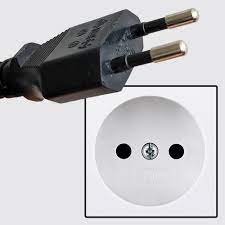
In that case, as long as the power supply can handle US voltage, you just need to use the right plug. Often times, plug adapters will work here. In a worst case you can get medieval and cut the old plug off, replacing it with one that will work in US outlets.


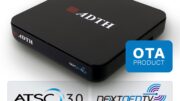

……You just can’t use it for over-the-air antenna use…………..Not quite right. If you use an ATSC Digital TV Converter Box as an external tuner and connect it to an HDMI port on the TV, it will work. The TV will work as a monitor.
Assuming the voltage works out and that it works at 60Hz, it’s not impossible to use it as a monitor. Just a lot of variables there.
Most modern TVs are dual voltage nowadays: AC 110-240 V, 50/60 Hz. The only limitation is the TV tuner (ATSC, DVB-T, ISDBT) but you can solve that problem using an external set-top box (converter) with the applicable tuner to your country. Cheers!
I have a USA smart tv what I would like to use in Europe/PAL system. How can I do it what equipment do I need to do it?
PAL isn’t used in most European countries anymore. If you want to use it with an antenna, you’ll need to get a DVB-T2 tuner which you can probably get there. If you’re using it to stream or play media, you’ll just need to make sure that you have the right power cord. Generally the back of the TV will let you know if it can accept 220-240 volt electricity. If it does you’ll just need a simple travel adapter, the same sort of adapter you’d use for anything else you use when you are in Europe.
Thank you very much for the information!
I’ve always had Panasonic telly’s. Since I moved to the US I brought one of their first plasma tv’s and its still working to this day. Panasonic dont sell tv’s over here any more but as I as considering a new tv, I was thinking of getting one sent from the UK. I don’t use an aerial. I stream everything so do you think a UK model would work over here?
I think there are too many variables there. A UK TV could work but more likely it wouldn’t. My advice would be to find a US TV that you like.