
I originally wrote the article below in 2017. I thought it was time to look at it again.
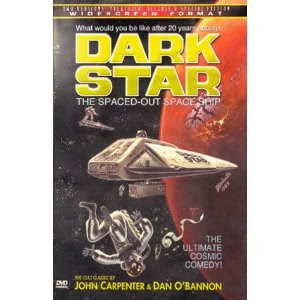
The image you see above is the cover art for Dark Star, a seminal film from the early 1970s. It was the first sci-fi stoner comedy and while that may not seem so noble, it was also an early effort from sci-fi master John Carpenter. I’ve seen it, and while it’s not the best movie ever, it’s a part of history and if you are a fan of sci-fi and horror, it’s something you should seek out.
Except, well, you can’t. Spend up to $20 if you want to buy the physical disc, and that may be your only choice. It’s better than nothing but for a film you’ll likely only watch once it’s not very appealing. That’s why we need a national streaming library.
Libraries as a whole may seem like a relic of another time, but there was a time they were the proudest asset of many cities and towns. The Library of Congress contains a copy of almost every printed or recorded work in the US, and many of its contents are available online once their copyrights expire.
Fact: copyrights almost never expire
Unfortunately copyright extensions in previous years mean that almost nothing ever falls into the public domain, and that’s why we need a national streaming library. Here’s the concept: If a title isn’t available for streaming from any major service at any price, the Library of Congress would permit you to stream it at a fair price (say $3 per title.) There are thousands and thousands of films and TV show that are not available anywhere but are still under copyright; they’re an important part of our heritage. Unlike books which stay in libraries once they’re out of print, TV shows and movies simply disappear if there is no way to watch them.
In my mind, I see this as a joint venture between the Library of Congress, motion picture academy, television academy, and a streaming player like Apple, Netflix or Google. The government could provide some oversight while the companies could provide the playback technology. Before you say this isn’t the most important thing the government needs to handle, remember that movies and TV are the distillation of our culture, the very essence of the thing we fight to protect. It’s something we all share and something that should be there for everyone. At the very least an initiative like this would force studios to keep movies and TV shows available.
What do you think? Do you think this would be something worth doing?
2023 Update
In 2023, more old content than ever is disappearing from streaming libraries. Blame copyright, as I did five years ago. It costs practically nothing to keep a film on a server, but as soon as someone streams it you have to pay a lot of people with various old royalty contracts. A lot of streamers have decided it’s not worth the time. Some older content is still out there for sale on iTunes, Google Play, or other apps, but it’s getting pricier and priciers. Believe it or not your best option is still to try to find a physical disc.
We’ve started to see some content return on advertiser-supported apps like Pluto TV, but let me tell you, watching a movie where commercials are randomly inserted is a pretty bad way to do it. It’s fine if it’s your only choice, but seriously, it’s absurd that this is how we are doing this.
Honestly, this is a ridiculous state for us to be in at this point. There is so much excellent cinema that’s rarely seen today. Try to find virtually any Oscar winner from the 1960s or 1970s. If it’s not on TCM, you may be able to rent it. Or, you may not. Try to find old TV shows from any time in the 20th century and you’ll find yourself in the same boat.
Where we go from here
I still think there needs to be some action here. A Library of Congress streaming service doesn’t seem like the option, though. It’s too hard to get anything at all from Congress, let alone a massive expansion of the Library. But I think there’s another way.
If you made an NEA (National Endowment for the Arts) grant available, perhaps you’d see one of the streaming apps competing for it. Such a grant could lower the cost of carrying that content. It’s even possible that an app like kanopy, which allows local libraries to offer free streaming content, would get involved. Qualifying content could rent for $1 or $2 rather than the current price of $5 or so that you see for older content. And, it would guarantee that the content would be available and wouldn’t disappear.
And yes, this would take money. But would it take a lot of money? Not by government standards. It could be attached to a spending bill like the one put in place last month. It would be a barely noticeable drop in the bucket. It’s a business-friendly option, which would please one side of the aisle. It’s also arts education, which would please the other side. All we need is someone to champion it.
So, hey, any Senators or Representatives out there? Who wants to take the first steps to making sure future generations can watch Rich Man, Poor Man? I think that all culture is significant, and even though no one thinks Room 222 is a masterpiece, it’s still an encapsulation of what was going on at the time. How can we make this happen?





Be the first to comment on "UPDATED FOR ’23: We need a national streaming library"