
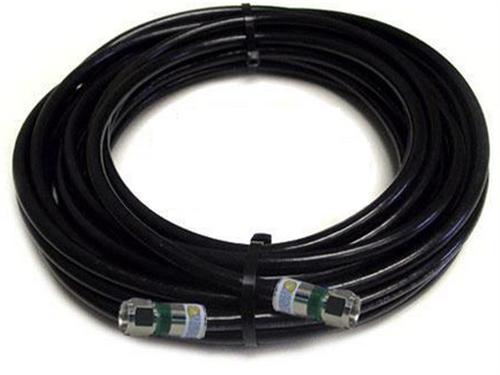
Of course, it depends on what you’re using it for.
In most cases, RG6 cable is the best choice, but let’s back up. RG specifications (the “RG” used to stand for “radio guide”) are used to distinguish different types of cables, but they aren’t the only way. In most cases an RG6 cable has better shielding than an RG59 cable, and is thicker because of it. However, many RG59 cables are just RG6 cables that didn’t quite meet those specs and are just repackaged.
How to tell what you have
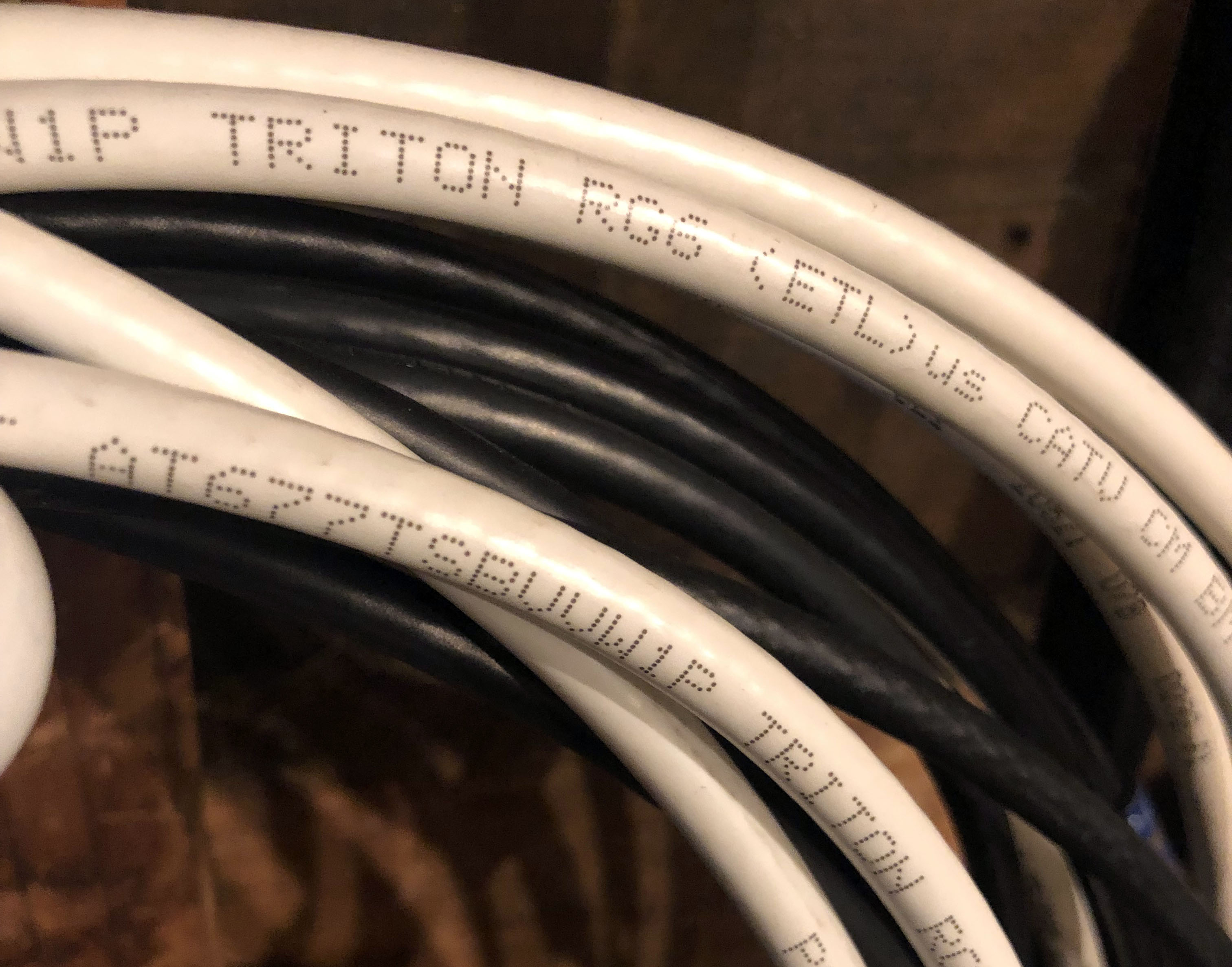
If you look at almost any cable, you’ll see words on the side. It should say that it is RG59, RG6, or RG11. If it doesn’t, it’s probably not a professional grade cable and you should avoid it. You can google the writing on the side and generally get more information,
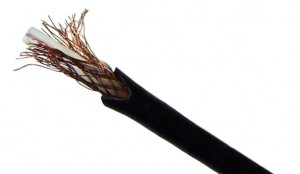
If you open up any of these cables you should find a braided metal sheath surrounding a white or clear plastic center that has a piece of copper in the center.
RG59 is for antennas
Generally I don’t even buy RG59 cable anymore but if I do it’s going to be for an antenna. RG59 cable has higher loss and isn’t generally able to handle the frequencies used by satellite.
RG6 is used for most satellite cables
Properly made RG6 cable should give you the ability to get a stronger signal over a longer run, which is important for satellite TV since there’s a lot more signal there. Antennas are often OK with RG59 cable but do just fine with RG6 as well.
RG11 is only for special uses
RG11 cable is made for special purposes like burial or very long runs. It’s so thick that it needs special connectors and is very hard to bend. It’s a real pain to use and isn’t recommended for most indoor installations.
What to look for in a cable
When you’re looking for a cable for your satellite system, you should also be looking for cables that are sweep-tested to 3GHz (meaning that they are guaranteed to work with satellite) and have a solid copper core conductor anywhere that power is going to be used (like where the power inserter is placed.) Quad-shielded cables aren’t really that important for home but they don’t hurt.
If you’re looking at cables that you’ve salvaged from other projects, take careful stock of what you have. Is there any corrosion around the connectors? Does it look like the cable was bent sharply at any time? Older cables aren’t always the best bet. They may come in handy for a short while, but if you’re looking for a long-term solution, you may want to buy new cables.
If you want to learn an awful lot more about cables, check out Cables 101, our series that takes you through all the different types of cables and all the terms associated with them.
Where to buy cables
If you’re looking for cables for satellite TV, cellular boosters, or pretty much anything other than plain old TV antennas, skip the home store. Most of the cables you’ll find there are lower quality. They have ends molded onto them that aren’t commercial grade. Even bulk cables from home stores don’t usually have solid copper center conductors, which is a must for most modern satellite TV installations.
Instead, buy from a high-end retailer like Solid Signal. You’ll find the cable you’re looking for and you’ll know it’s right for your needs. Plus, you’ll find tons of free tech support and you can reach real technicians at our 100% US-based call center who can help you decide what’s best for your needs.

I do use RG11 for OTA antennas on long, straight runs to a connection/distribution point. It makes a big difference as compared to RG6, especially in fringe areas.
Have rg6 coax cable and pull in 30 channels installed rg11 to same location and now get 10 channels both runs at a 100 feet any input .Many thanks Bernie Barr.
RG11 has much less signal loss than RG6. You may have a bad connector somewhere.
thanks for that when the ice melts I will get up there
for signal boosters in homes or small offices what type of cable do you recommend? am reading that lm400 is the recommended one for big area coverage but for small ones is the rg6 or rg11 a more cost effective option?
It depends if it is a 75 ohm or 50 ohm booster. For 75 ohm boosters, RG6 is generally recommended unless you have a very long run. For 50 ohm boosters LMR400 is the standard.
thanks for replying. LMR400 are 50 ohm cables, and my boosters are all 50 ohm ( I have 10). I have been reading that 50 ohm boosters can perfectly work with 75 ohm cables like rg6 or rg11. I know that LMR400 are the standard, but all my installations are going to be in small homes or offices, I want to know if using rg11 or rg6 is functional in this conditions.
What you have been reading is not correct. You experience a decent amount of loss by using the wrong impedance cable and even more loss with the adapters required to use the right connector. RG6 or RG11 would function but you would have a far less efficient system.
thank you for replying. LMR400 it is then. better safe than sorry.
No. The impedance mis-match will eat up bandwidth and also cause a loss of signal strength regardless of the boosters.
I am looking at running a 1000 ft from the front of my property where I have cable to the back of property. Can I run coaxial and what should I run. Or should I run fiber?
I am looking at running a 1000ft coaxial for cable for the cable companies connection at the front of the property to my building in the back. Can I utilize rg6 or should I utilize fiber
At that distance fiber might be better.
Fiber may not be the best choice because of the amplification required to “pump” it through the system. RG11 is fine if you are looking to not having to add additional hardware. Is the cable company already using fiber if they are you’ll need the matching electronics to continue with fiber including the converters to translate from fiber to RF on your end.