
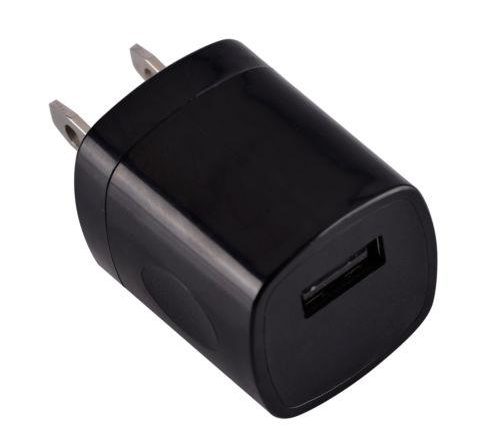
I blame myself. At least a little bit. That big web site we all shop at? The one that has two days of deals that they advertise like crazy? I got sucked in. They had a power bank for something like $15 that promised 36,000mAh of battery power. Now, I work at Solid Signal. Generally when I need something like that, I get it from the site I work at. It’s called “eating your own dog food.” And honestly, I can’t tell you the last time I was disappointed with anything I got from my favorite tech web site.
I got that power bank for that price, and then I went to use it. It’s summer time, and I got it to feed a USB-powered bug zapper. The bug zapper claimed it drew 5 volts, 2 amps. That’s the same as a tablet or a fast charger for your phone. If that power bank really delivered 36000mAh then the math says it should have been able to deliver 2 amps for 18 hours. Seemed pretty good to me, since I only needed it for about 4 hours.
I’m the one who got zapped.
That power bank lasted about 2 hours. TWO HOURS. I had another power bank around, but I had to admit I was surprised. I wondered, was the bug zapper pulling more current than it said? In that short period of time it killed a lot of bugs. Maybe it was pulling a ton of current during those short zaps. Or maybe, I’m the one who was in for a shock.
Luckily, I had one of these:
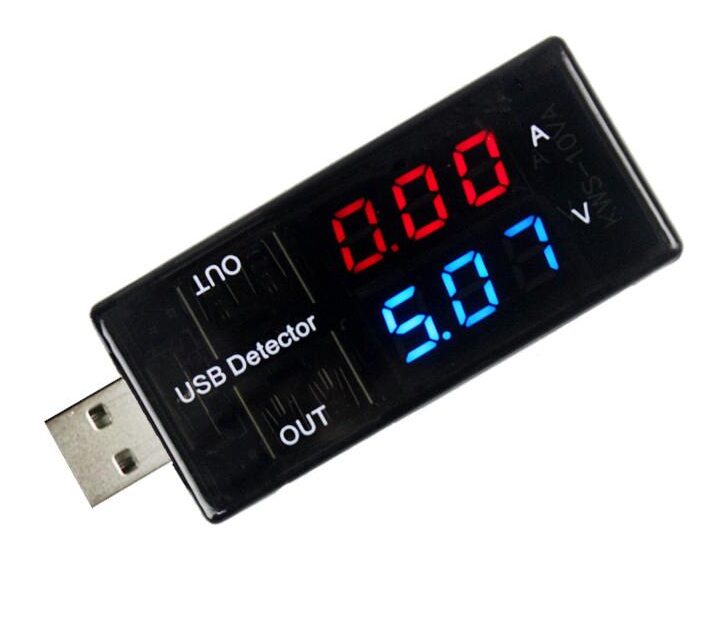
This is Solid Signal’s Wireless USB Voltage Meter. It will tell you, in volts and amps, how much power is being pulled. I charged up that power bank, the one that said it was 36,000mAh. I connected the meter between the power bank and the bug zapper. It was very clear to see that it was pullng 5 volts and about 2 amps, consistently. I set the whole thing up so that I could see if there was any change to the current when a bug got zapped.
Not surprisingly, it didn’t take long before I had a customer. And I had a great view of the USB meter. There was no real difference in draw. It was about .1 amp for about 2 seconds, which translates to 3mAh. In order to make up the difference in current between what I got and what they said I should get, I would have to kill about 9,700 bugs in two hours. It’s a little hard to believe that happened.
I ran the bug zapper to see how long it actually lasted. The result was that it made it 106 minutes, in other words one hour forty-six minutes. That translates to providing 5 volts with roughly 3,600mAh. One tenth of what was promised.
Was I lied to?
Yes, yes I was. There’s no apologizing here. Now, you can say that perhaps it was rated to provide only 1/2 volt at 36,000mAh. But if something has a USB connector you expect 5 volts. Of course you do. I got suckered, and I should have known better.
It would be better if power banks were rated in watts, because that would level things out. It would say how much you could supply at any possible voltage and amperage. I don’t know why you don’t see that. But maybe it’s so poor saps like me can buy power banks that are mislabeled.
There’s a better lesson here. If it sounds too good to be true, it probably is. Similar priced power banks at Solid Signal have a lot less capacity. And if you do want a power bank that can keep your stuff going for 18 hours, you’ll pay more for it.
It’s always better to shop with a retailer you trust. I ended up returning that power bank and getting a refund. But it wasn’t easy, because sometimes dealing with them isn’t easy. I wish I’d bought from Solid Signal, because refunds (while rare) are easy. It only takes one call to [email protected] to make them happen.
Next time I’ll know better.



First, almost ALL power banks “lie” and by this I mean they usually state the power rating for the Li battery inside NOT for the 5V supplied to charge or run your device, MOST, but not all, rate their power banks this way. If it is rated this way you can expect about 50 – 60% of that rating being what you will get for charging your phone or running something. If the manufacturer actually rates the power bank by what is supplied at the 5V port they will say so. That makes sense since if they do this it is a really good advertising statement.
In this case one can, probably, easily tell if something is bogus by simply comparing the size and heft of the device compared to those you have that work as expected. 36 Ahr (36,000 mAH) is huge and if the box/case is not correspondingly, about 3-times, larger than say your 10Ahr power bank then it is either bogus OR they have made a fantastic power/weight ratio breakthrough! (NOT, very likely.)
I have articles on my web site describing my tests on some of these devices which is how I found out that most do NOT state the power rating at the 5V port but for the 3.7V Li battery inside and what this ultimately means for you and charging.
Search on my amateur radio license call sign KE3FL to find my web site.
Question: Why are you showing a USB Charger and not a USP Power Bank?
Just to rile up the troops and start a conversation 😀
I have two Max Oak power banks. Both have lasted for years and charge up laptops, phones, ect. nearly perfectly.
Yes I bought from China.
SORRY.
But well past 1,000 charges promised and going strong. If the US had a comparable product I would have bought it.
I have two Max Oak power banks. Both have lasted for years and charge up laptops, phones, ect. nearly perfectly.
Yes I bought from China.
SORRY.
But well past 1,000 charges promised and going strong. If the US had a comparable product I would have bought it.