
Unless you’re fairly young, you’ve probably been with the same cell phone company for a long time. Sure, they all run specials to get you to switch, but at some point we all just settled into a pattern, right? Besides, a lot of people think at this point they’re all the same. Let’s look at the myths here and hopefully shed a little light on that.
Looking way backward
The company we know today as AT&T is AT&T, and it sort of isn’t. We all know that AT&T evolved from the very first telephone company in the USA. By the 1980s they were one of the largest companies in the world, because they were the sole provider of phone services for most of the country. That didn’t sit so well with the government, so they forced AT&T to separate all their business units. The country was sliced up into regions, with each region getting its own local phone company. Those companies started offering cell phone service, and so did the long-distance division of the original company, still called AT&T.
At the same time, there was a company called GTE which offered local and long distance service in some parts of the country. When AT&T was broken up, GTE instantly became a competitor, and when cell phone service was rolled out, GTE was there.
Flash forward to the 1990s and 2000s
Breaking up big companies was pretty popular in the 1980s, but by the 1990s the political world had shifted. Hands-off was the word of the day, so when these smaller phone companies wanted to merge, the government said “no problem.”
The local phone company serving the deep south and Florida bought the one serving the southwest and the one serving Southern California. They also bought the cell service provider from AT&T. The new company was called SBC, the cell company was called Cingular. Then, SBC bought AT&T’s long distance service and rebranded the whole company (including the cell service part) as AT&T.
In the meantime, the local phone company that served the northeast bought GTE. They formed a partnership with the European company Vodafone to create a new cell service provider. The merged company was called Verizon, and the cell company was called Verizon Wireless, until Verizon bought the whole thing back from Vodafone and now it’s just called Verizon.
Different ways of thinking
AT&T’s infrastructure was based on Europe’s GSM standard, largely because that was the cool and popular thing to base it on at the time. Verizon’s infrastructure was based on Asia’s CDMA standard, because by the time it got going that was cooler and more popular than GSM. This set up the essential problem, and the reason people thought one carrier was better than another.
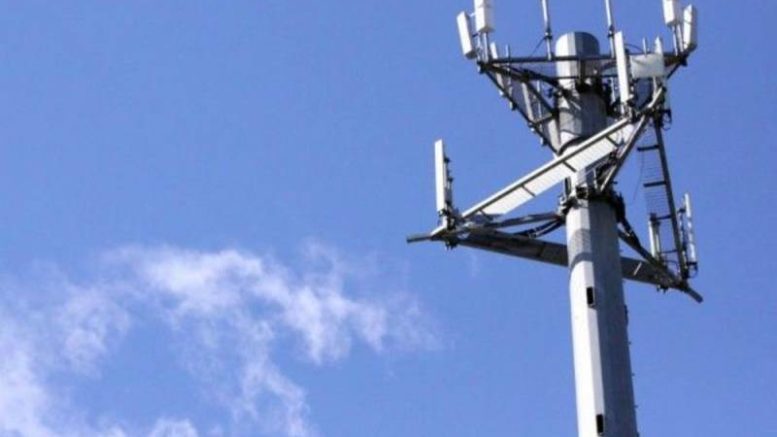
GSM used a lot of small towers spaced closer together. CDMA used fewer towers, spaced further apart. Conventional wisdom was that GSM gave you better voice quality when you could get it, but CDMA gave you better coverage, especially in the suburbs. And so people lined up to get the service provider they thought would give them better service.
To some degree this changed with the introduction of smartphones. All of a sudden it wasn’t just about voice calls. For the first few years, AT&T had an exclusive on the iPhone, and people went to them because of it. Verizon remained the company with better voice coverage in much of the country, but didn’t really shine in the smartphone arena until Androids became popular.
But that’s all in the distant past.
The whole GSM-vs-CDMA fight is about as dated as the Team Edward vs. Team Jacob fight. What happened? As people wanted faster data, everyone rolled out a new standard called LTE. LTE focused on data transmission. It treated even voice calls as data transactions. Verizon and AT&T both moved to LTE technology, and this leveled the playing field as far as coverage. The LTE standard is an evolution of GSM, but it also has some aspects of CDMA as well. The upshot is that everyone’s using the same tech now.
I suppose that this point I should mention T-Mobile because they’re also a big player in the US since they absorbed Sprint. They also use LTE technology, there’s no big difference in tech there either.
What about 5G?
Inevitably, one carrier or another will say they lead in 5G. Here’s the truth. All of the major carriers are still in the process of migrating over to 5G. The “nationwide 5G” that’s available from each carrier is good, but what we’re all really waiting for is the expansion into mid-band and millimeter-wave 5G, which will bring the speeds we were all promised. I’m not saying 5G’s a disappointment, but it’s not as much of a factor as you think right now.
Here’s what really matters
So the tech is pretty much the same. The phone selection is pretty much the same. So what sets one company apart from the others? Service. Getting good customer service from any cell company seems impossible these days, right? Wrong. AT&T leads the customer service effort by allowing independent dealers to sell their service. All of the cell companies do this, but most independents are the sort who walk the malls bothering you. AT&T allows companies to make a difference by giving you more.
For example, take Signal Group, LLC, parent company of this blog. We’re AT&T dealers, but we’re different. We don’t walk the mall. We don’t operate a showroom where you have to wait 45 minutes. We have a team of professionals who work through the phone. Using the phone – what an innovative way to offer phone service! That’s right. You can call the experts at Signal Group, and our full-service arm Signal Connect, and we’ll actually take care of you! We believe in treating people like they’re actually paying money to get service. Sounds amazing, right?
Don’t believe me? Email us at [email protected] during East Coast business hours. We’ll treat you the way you deserve to be treated. We’re here to actually take care of you. Give us a try and let us show you how cell phone service is supposed to be.




Be the first to comment on "AT&T vs. Verizon – here are some honest facts"