
I have a friend who has kept literally every cable he’s ever used. Most of them are in a shed on the side of his house. Now, this may sound like a pretty good idea. After all, cables are expensive, and really it’s hard to recycle cables because they have so many different components in them. It would seem to be a win-win.
But, let’s be honest here. You’re going to get to the point where you have a massive number of cables. I shudder to think how many cables I would have if I kept every one I’ve ever used since the mid-1980s. Second, most of the cables are going to be obsolete. Do I really need a full-size SCSI 1 cable for a Macintosh made in 1990? I doubt it. I mean, perhaps someone might in the future, if they’re trying to piece something together, but I personally will not. Third, and perhaps most importantly, cables age over time. The copper will oxidize, the plastic will become brittle, and sooner or later you’re going to end up with a cable that just doesn’t work.
Old coaxial cables… time to let go
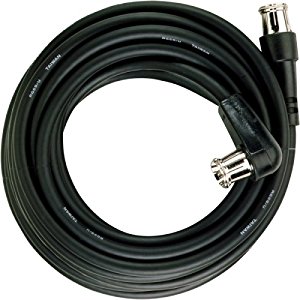
Take a look at the image at the top of this article. If you have some of these cables left over from your VCR-loving days… use them for your TV antenna if you absolutely must. Don’t use them for satellite TV, cell boosters, internet, or anything else. Why? Because they won’t work reliably.
Most cables with push-on connectors only conform to the RG-59 cable standard and that means they won’t have enough shielding to reliably transport satellite information. Remember that a satellite signal carries a lot more information than an antenna one — up to 100x as much depending on how you look at it — and so the cable requirements are a lot more strict. In order to carry so much information, the cable connection must be practically perfect. RG-59 cables just can’t guarantee that level of perfection.
The connector is really the big issue here
More importantly, the push-on connector itself is a problem. The little vertical slits that let it grip the connector securely can also let signal leak out and cause problems that way. There are push-on connectors designed for satellite, like those used on DIRECTV’s SWM Expander, but you’re not going to find them on a consumer-grade cables.
It’s really hard to trace down the kind of issues that come from using the wrong cable. They tend to be intermittent and weird. Keep in mind that depending on what kind of signals pass through these cables, they’ll be somewhere between 450MHz and 2200MHz. At 450MHz, the lower end of DIRECTV’s networking connections, a cable with a push-on connector will probably work fine. It may even work well at 1000MHz. But at 2000MHz it won’t. You have no control over which frequencies are selected for satellite signals over a wire, and unless you have some serious testing gear, you won’t be able to tell. So here’s what’s going to happen. Stuff is going to work, and then it won’t. You’ll get these weird intermittent errors that go away at weird times. And you’ll pull your hair out trying to figure out why.
If you want to be safe, if you want the best possible chance of a worry-free connection, you should be using RG6 cables with a solid copper core center conductor and satellite-rated compression cables. This isn’t just a way to make you spend more money, There is actually a difference with high-quality, satellite-rated cables.
Get the cable you need from Solid Signal
Solid Signal has a great selection of wire and cable, including made-to-order RG6 that’s super-high quality. You don’t need to keep a shed full of cables, just keep the ones you need and order new ones from Solid Signal. Not sure what you’ll need? Call the experts! We’re here during East Coast business hours at [email protected]. If it’s after hours, fill out the form below and we’ll get right back to you!





I will say that I do not believe Stuart’s claim that those slits on the connectors of push-on-cable connectors cause significant signal leakage.
Why you ask? Because they are around a solid return/ground metal part of the cable and if that part is not leaking, and all good TVs or boxes sold have connectors we should be able to trust, then there should not be any significant leakage from those slits.
So, I think claims like this should be backed up with tests and numbers.
On the other hand…
Most important: What Stuart says about the cables most push-on connectors are attached to is correct and I agree that it is not the cable to use for a satellite connection.
Would I use such a cable on a satellite or cable connection to my TV/box? Yes and No. Yes if I was doing a quick test-of-concept No for any permanent connection.
Why? Because, aside from the cable quality, push-on cables are for temporary work, like testing, NOT for permanent installations. A push on cable can be wiggled off by temperature changes, children having fun and bumping into things, or simply by moving your TV or box around a bit.
There is no substitute for good, properly tightened, screw-on cable connectors and cables made for the frequencies you’re going to be using.
Other than temporary testing DO as Stuart suggests and buy the best cable with screw-on connectors for your permanent satellite connections.